Old mine cut vs old European cut diamonds: how to tell them apart
In short
- Shape first: old mine cuts are cushion shaped with a squarish outline, old European cuts are round.
- Both are hand cut for candlelight, with a small table, a tall crown and an open culet.
- Look straight down through the table. A small dot or hole in the centre is the open culet and it is the fastest sign of an antique cut.
- Old cuts flash in broad, lazy blocks of colour. Modern brilliants scatter fine white sparkle. Neither is better, they are different effects.
- Never recut an intact antique stone to modern proportions. It destroys both the character and the collector value.
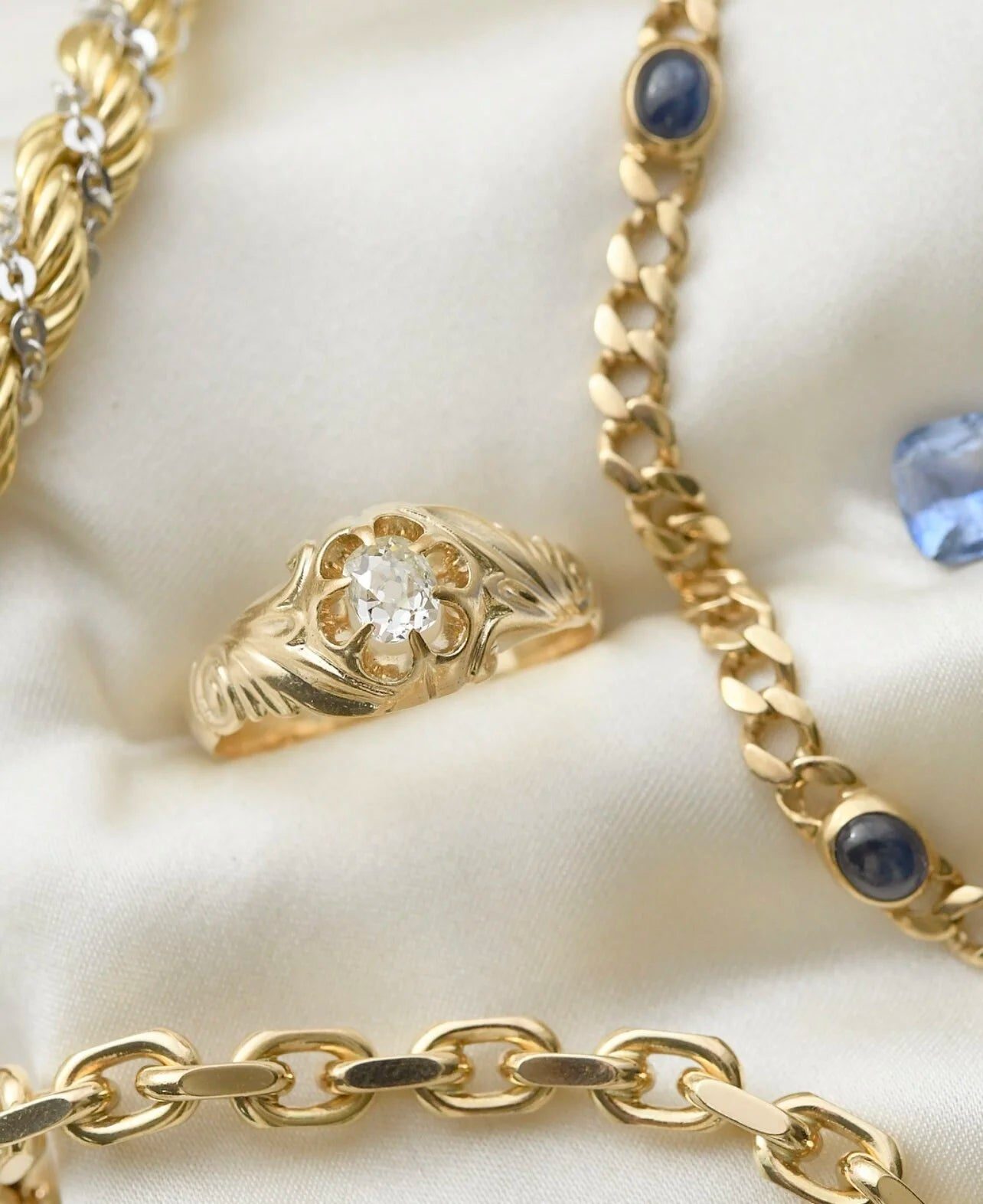
Two antique diamonds sit side by side. One is round, one is a soft squarish cushion. Both look sleepy next to a modern brilliant, and both are worth more than the modern stone to the person who came looking for them. Telling them apart takes about ten seconds once you know what you are looking at.
The short version
An old mine cut has a cushion outline: squarish, with rounded corners and often a slightly lopsided shape. It was cut by hand, mostly between the early 1700s and the 1890s.
An old European cut has a round outline. It came later, roughly 1890 to 1930, once cutting wheels could turn a stone truly round.
Everything else about them is close to identical: a small flat table on top, a tall crown, a deep body, and an open culet at the bottom.
Why both look different from a modern diamond
Antique cuts were shaped for candlelight and oil lamps. That is not a romantic detail, it is a design brief. Under a small, warm, moving light source, you want a few large flashes rather than a fine spray of white light, so cutters left the crown high and the table small. Depth and mass mattered more than the last percent of brightness, partly because a cutter paid by the carat did not want to grind away weight.
The modern round brilliant came out of the opposite brief. From the 1920s onward, cutters worked to proportions calculated for maximum light return, and by the time electric light was everywhere, the sharp, white, all over sparkle we now think of as normal had become the standard.
So the practical difference is this. A modern brilliant gives you many small white sparkles. An old cut gives you fewer, larger, slower flashes with more coloured fire in them. In a bright shop, the modern stone wins. Across a dinner table in the evening, a lot of people prefer the old one.
How to tell them apart in your hand
1. Look at the outline
This is the whole answer most of the time. Round means old European. Cushion, squarish or slightly uneven means old mine. Old mine cuts were shaped by eye, so their outlines are often not symmetrical, and one shoulder can sit higher than the other. That is a sign of authenticity, not a fault.
2. Look straight down through the table
Hold the stone under one light and look through the flat top. If you see a small dot, a grey circle or something that looks like a tiny hole in the very centre, you are looking at the open culet.
The culet is the bottom point of the stone. On antique cuts it was polished flat so the fragile tip would not chip in the setting. Seen through the table, that flat facet reads as a hole. Modern brilliants are cut to a sharp point, so their centre is clean.
An open culet is the single most reliable at home indicator that a diamond is an antique cut.
3. Check the table and the crown
Antique cuts have a small table, often around half the stone's width or less, and a crown that stands up noticeably. Look at the stone from the side. If the top half rises like a dome above the setting rather than sitting flat, it is an old cut.
4. Watch how it flashes
Rock the stone slowly. Old cuts throw broad blocks of light and colour that appear and disappear in chunks. Modern cuts scintillate constantly with much finer points of light. Once you have watched both, you can call it from across a room.
The transitional cut in the middle
Between the old European cut and the modern brilliant there is a stone that gets called a transitional cut or an early modern brilliant, cut roughly from the 1930s to the 1950s. It has a bigger table and a lower crown than a true old European, so it is brighter and more modern in feel, but it often still carries a small culet.
Transitional cuts are genuine antique stones and they are frequently mislabelled in both directions, sometimes as old European cuts because that sells better, sometimes as modern stones by people who did not look at the culet. If you are buying, ask for a photograph taken straight down through the table.
Why collectors pay a premium
Grading reports were designed around modern proportions. An old cut will often score modestly on a cut grade it was never cut to satisfy, so the paperwork undersells it. In the market, three things push the price back up.
- Supply is finite. No one is producing new old mine cuts. Every one that exists was cut by hand, generations ago.
- Most have been destroyed. Through the twentieth century, huge numbers of antique stones were recut to modern proportions for fashion. Each recut permanently removed one from the pool.
- Character cannot be manufactured. A hand cut stone with a slightly uneven outline and a big open culet has a look that a machine cut stone does not reproduce, and buyers of antique jewelry come specifically for it.
Never recut an intact old stone
If you own an old mine or old European cut in original condition, leave it alone. Recutting to modern proportions typically costs 10 to 25 percent of the weight, and more on a deep old mine cut, erases the history of the stone, and in the antique market usually lowers the value rather than raising it. The exception is genuine damage, a chip that threatens the stone, and even then a specialist should assess it first.
The same logic applies to the setting. An original Victorian or Edwardian mount with the stone still in its first home is worth more intact than as a loose stone plus scrap gold. If you are working out what your piece is, our era by era guide to dating antique jewelry will place the mount, and our guide to gold marks will tell you what it is made of.
Buying an old cut without a lab report
Many antique stones are sold unpapered, because sending a mounted stone for grading means unsetting it. That is normal in this market. Instead of a report, ask for these things.
- A photograph taken straight down through the table, showing the culet.
- A photograph from the side, showing the crown height.
- The measurements in millimetres and the estimated carat weight.
- A clear statement of any chips, abrasions or repairs, and photographs of them.
- Confirmation that the stone has not been recut.
A seller who can answer all five has handled the piece properly. On Nextmine you can ask those questions directly on the listing before you commit, and your payment is held until the piece has arrived and you have confirmed it. See what is listed now.
The Hallmark Society's cut comparator puts old mine, old European, transitional and modern brilliant side by side, drawn from real proportions rather than traced.
Common questions
Are old cut diamonds worth more than modern ones?
Per carat, a modern round brilliant of the same colour and clarity usually appraises higher on a standard grading sheet, because grading rewards modern proportions. In the collector market, an untouched old mine or old European cut in a period setting often sells for more than the paperwork suggests, because supply is fixed and demand is steady. Condition and originality drive the premium.
Do old cut diamonds sparkle less?
They sparkle differently. Modern cuts are engineered to return a lot of fine, white light under bright electric light. Old cuts were shaped by hand for candlelight, so they give fewer and larger flashes with more coloured fire. In low, warm light many people find old cuts more alive.
What is a culet?
The culet is the point at the bottom of the stone. On antique cuts it was polished into a small flat facet so the fragile tip did not chip. Viewed from above through the table, that flat reads as a tiny hole or grey dot. Modern brilliants are cut to a sharp point, so they show nothing in the centre.
What is a transitional cut?
A transitional or early modern brilliant is the step between old European and modern round brilliant, cut roughly from the 1920s to the 1940s. It has a larger table and a shallower crown than an old European cut, but often still keeps a small culet. It is a genuine antique cut in its own right.
Can I identify an old cut without a loupe?
Often yes. Hold the stone under a single warm light and look straight down. A round outline with a small table, a visible dot in the centre and a few big blocky flashes points to an old European cut. A squared off cushion outline with the same features points to an old mine cut. A 10x loupe or a phone macro lens just confirms it.
Nextmine is a marketplace for jewelry that has already had one life. Buyers pay into escrow, sellers are paid once the piece has arrived, and every listing is someone's own photographs of their own piece.
Browse the pieces for sale·How payments work·Questions and answers